
Are you puzzled why those brand-new, unworn shoes you've kept 'safe' in the closet are now crumbling or falling apart, despite never seeing the light of day? It's a common and frustrating mystery for many shoe owners.
Shoes fall apart even if you don't wear them primarily due to material degradation, a natural process where components like glues, foams (especially polyurethane midsoles), and rubber outsoles break down over time due to exposure to oxygen, humidity, and temperature fluctuations. This phenomenon, often called hydrolysis, particularly affects polyurethane, causing it to become brittle and crumble. Additionally, adhesives can dry out and lose their bonding power, and natural materials like leather can dry and crack if not properly conditioned or stored. Thus, shoes effectively "expire" even in storage.
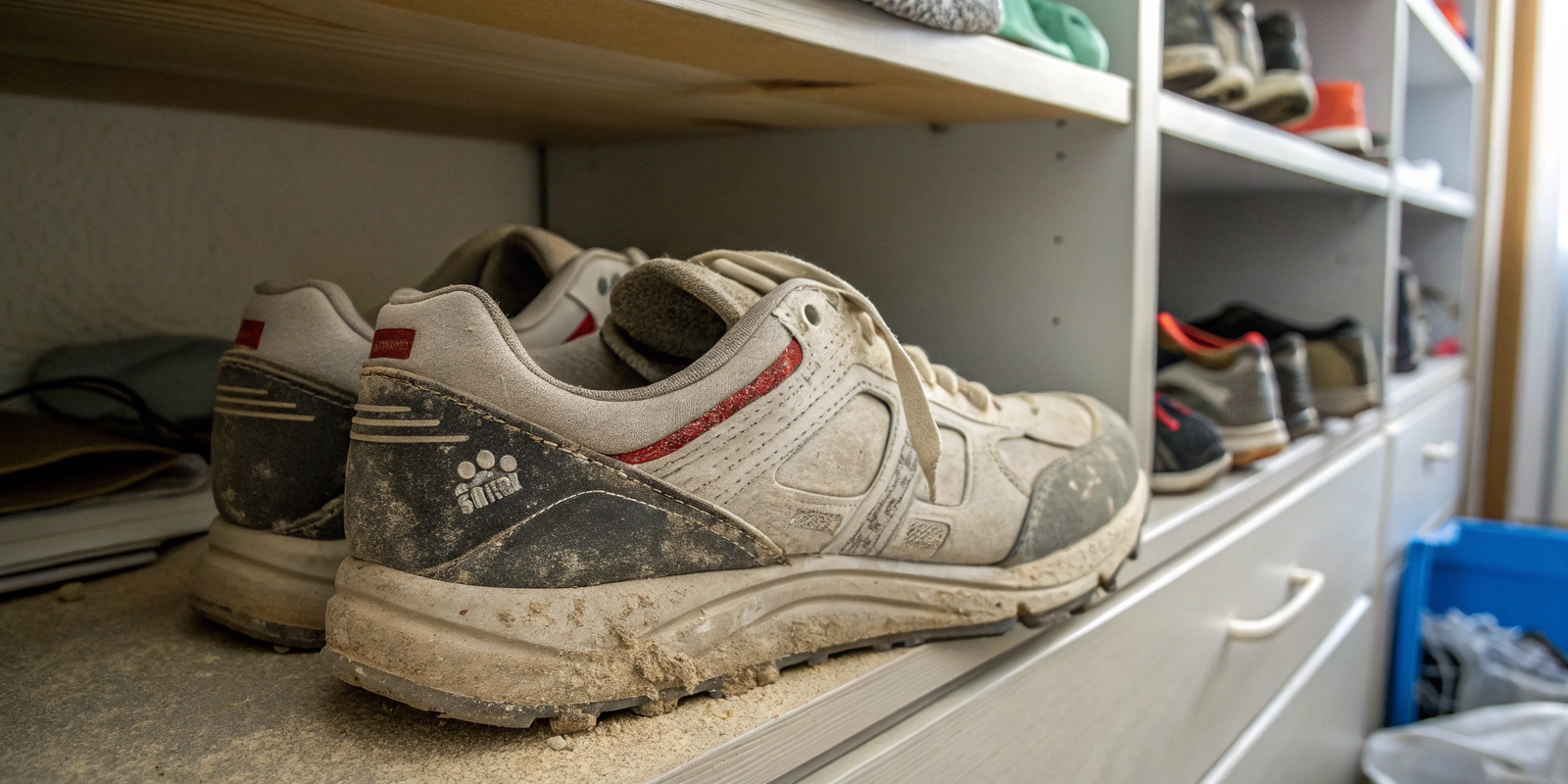
- The Surprising Truth: Shoes Age Even When Stored
Have you carefully tucked away a beloved pair of shoes, only to find them decaying when you retrieve them years later, despite never being worn? It's a genuinely baffling experience for many.
The surprising truth is that shoes age even when stored due to several natural material degradation processes. The most significant is hydrolysis, where polyurethane (a common midsole material) reacts with atmospheric moisture, causing it to break down and crumble over time. Additionally, adhesives can dry out, harden, and lose their bond strength, and rubber compounds can oxidize, becoming brittle. These chemical reactions occur regardless of wear, making proper storage conditions critical for extending a shoe's "shelf life."
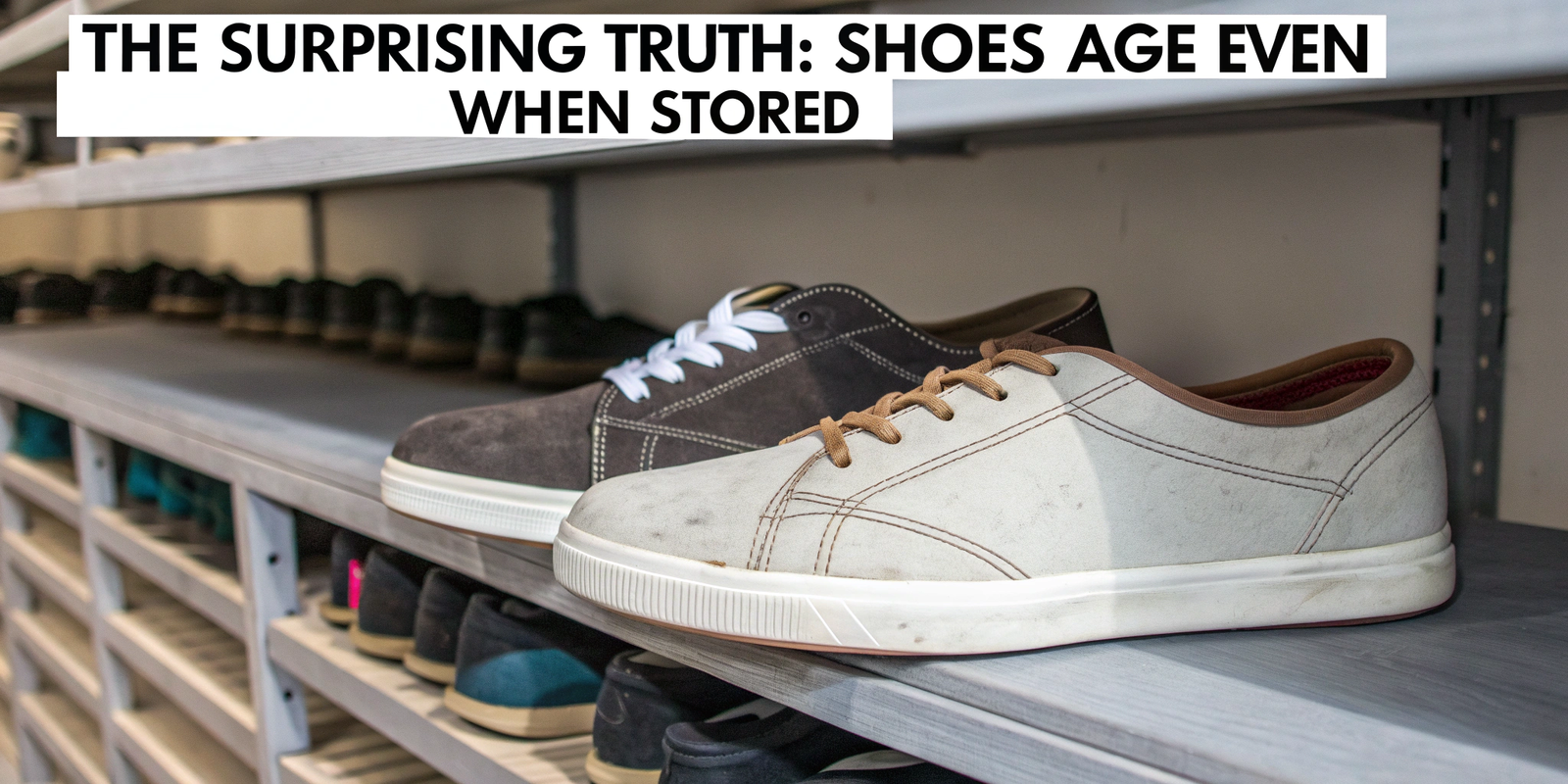
The Silent Killer: How Shoes Decompose in a Box
It's a phenomenon that puzzles many, but the breakdown of unworn shoes is a scientific certainty.
- 1. The Arch-Nemesis: Hydrolysis of Polyurethane (PU)
- What it is: Polyurethane (PU) is a fantastic material that we use extensively in midsoles for its cushioning, flexibility, and lightweight properties. Many popular sneakers rely on PU foam.
- How it works: Hydrolysis is a chemical reaction where water molecules gradually break down the polymer chains of the PU. Even ambient humidity in the air is enough for this slow, silent process. The water essentially "eats away" at the material from the inside out.
- Impact: Over time, the PU foam becomes brittle, crumbly, and loses its structural integrity, leading to the midsole disintegrating. This "crumbling sole" effect is perhaps the most common way unworn shoes fall apart. It's frustrating because the shoe can look perfect on the outside, but then crumble with the first step.
- My Experience: I've seen this countless times with older samples in our archives. A shoe from 10-15 years ago, never worn, might look pristine until you touch the midsole and it turns to dust.
- 2. Adhesive Degradation (The Glue Failure):
- What it is: Most shoes are constructed using a combination of stitching and various types of adhesives (glues) to bond the upper to the sole, or different parts of the sole together.
- How it works: Adhesives are organic compounds that also degrade over time. They can dry out, harden, and lose their elasticity and bonding strength, especially with changes in temperature and humidity. The chemical bonds within the glue simply weaken.
- Impact: This leads to sole separation (where the sole detaches from the upper), or layers of the outsole coming apart. A perfectly good-looking upper might suddenly detach from the sole, rendering the shoe unwearable.
- 3. Oxidation of Rubber (Hardening and Brittleness):
- What it is: Rubber, a primary material for outsoles, is a polymer.
- How it works: Over time, the rubber compounds react with oxygen in the air (oxidation). This process can cause the rubber to harden, lose its flexibility, and become brittle.
- Impact: The outsole can crack, crumble, or even snap when put under stress (like walking), even if it hasn't seen much action. While less dramatic than PU crumbling, it still renders the shoe unwearable.
- 4. Material Aging (General Degradation):
- What it is: Other organic materials, like certain fabrics, synthetic leathers, or even natural leather (if not cared for), can degrade in storage.
- How it works: Fabrics can become brittle, synthetic coatings can peel or crack, and leather can dry out and become stiff if not moisturized.
- Impact: While these might not cause the shoe to "fall apart" as dramatically as sole separation, they contribute to the shoe's overall deterioration and aesthetic decline.
These processes are continuous. Even in a shoebox, molecules are reacting, bonds are breaking, and materials are slowly, but surely, decaying towards their natural end.
| Degradation Type | Responsible Material(s) | Mechanism of Breakdown | Visible Impact on Unworn Shoes | Primary Accelerating Factors |
|---|---|---|---|---|
| Hydrolysis | Polyurethane (PU) midsoles | Water molecules (humidity) react with and break down PU polymers. | Midsoles become brittle, crumbly, and disintegrate into dust. | Humidity, heat, time. |
| Adhesive Degradation | Various glues/adhesives | Chemical bonds in adhesives weaken, dry out, become brittle. | Sole separation (upper detaches from sole), layers of sole delaminate. | Temperature fluctuations, time. |
| Oxidation of Rubber | Rubber outsoles, some rubberized components. | Oxygen in air reacts with rubber polymers, causing stiffening. | Outsoles become hard, brittle, crack, or snap. | Oxygen exposure, UV light, heat. |
| General Material Aging | Fabrics, synthetic leathers, some plastics. | Polymer chains break down, plasticizers leach out, material breakdown. | Fabrics become brittle, synthetic coatings peel/crack, materials stiffen. | Heat, UV light, oxygen, time. |
Do unworn shoes expire? Have you ever wondered if all those unworn shoes in your closet are slowly losing their battle against time, even without a single step? The concept of a shoe expiring without use might seem odd, but it's a reality. Yes, unworn shoes absolutely expire due to material degradation over time, a process often referred to as "shelf life." This is largely because their components, like polyurethane midsoles and various adhesives, are organic materials that naturally break down through processes such as hydrolysis (reaction with moisture) and oxidation (reaction with oxygen). These chemical reactions lead to materials becoming brittle, crumbling, or glues failing, rendering the shoes unwearable even if they've never been worn.
At Lucas, we craft shoes for durability under wear, but we also acknowledge the inherent 'expiration date' of materials. It's a fundamental aspect of product design that all items, including shoes, have a finite lifespan, regardless of usage.
The Shelf Life of Soles: Why Time is an Enemy, Not Just Mileage
The idea of shoe expiration isn't about a food-like spoilage, but a gradual, irreversible material breakdown.
- 1. Inherent Material Properties:
- What it is: The synthetic polymers (like EVA, PU, various rubbers) and adhesives we use in modern shoes are chosen for their performance characteristics (cushioning, flexibility, grip, light weight). However, these are not inert materials; they are organic compounds.
- How it works: From the moment they are manufactured, these materials are undergoing slow chemical reactions with their environment (oxygen, moisture, UV light). These reactions slowly alter their molecular structure.
- Impact: Think of it like a rubber band that sits in a drawer for years. It slowly loses its elasticity and eventually snaps. Shoes are subject to the same principle.
- 2. Hydrolysis and Oxidation Again:
- What it is: These are the primary culprits. Hydrolysis affects polyurethane, making midsoles crumble. Oxidation affects rubber, making outsoles brittle.
- How it works: These reactions don't require the shoe to be stomping on pavement. They occur simply when the shoe is exposed to the air we breathe and the humidity in our homes.
- Impact: Even if a shoe is perfectly sealed in a box, if that box isn't airtight and stored in a perfectly controlled environment (which most closets aren't), these reactions will happen. The "expiration" is simply when the material's integrity falls below a usable threshold.
- 3. Adhesive Shelf Life:
- What it is: The glues used to hold shoe components together also have a lifespan.
- How it works: Adhesives can degrade, dry out, lose their flexibility, and ultimately fail over time, regardless of whether stress has been applied to them through walking.
- Impact: We often see unworn shoes where the sole completely detaches from the upper, or individual layers of the sole peel apart. This is a common form of "expiration."
- 4. Plastics and Plasticizers:
- What it is: Many synthetic leathers, coatings, and plastic components in shoes rely on plasticizers for their flexibility and soft feel.
- How it works: Over extended periods, these plasticizers can leach out of the material.
- Impact: This causes the material to become stiff, brittle, and prone to cracking or peeling, making the shoe uncomfortable or unsightly.
- 5. The "Best By" Analogy:
- What it is: Just like food has a "best by" date for optimal quality, shoes have an implicit one.
- How it works: While not typically stamped on the box, the materials used mean that shoes will typically degrade noticeably within 5-10 years, and sometimes even sooner for highly synthetic or polyurethane-heavy models.
- Impact: This means that a shoe bought today might not be in wearable condition in a decade, even if kept in its original box.
So, yes, unworn shoes do expire. It’s not a malfunction; it’s the natural course of material degradation. This is why collectors often go to extreme lengths to control temperature and humidity for their prized possessions.
| Material Component | Primary Degradation Process | Effect on "Expiration" | Typical Timeframe (Approx.) | Mitigating Storage Conditions |
|---|---|---|---|---|
| Polyurethane (PU) Midsoles | Hydrolysis | Crumbly, brittle, loss of cushioning. | 5-10 years (can be shorter) | Low humidity, stable cool temperature. |
| Adhesives (Glues) | Oxidation, drying, chemical breakdown | Sole separation, delamination of layers. | 5-15 years | Stable temperature, low humidity. |
| Rubber Outsoles | Oxidation | Hardening, brittleness, cracking. | 10-20 years | Dark, cool, low oxygen environment (e.g., airtight bags). |
| Synthetic Leathers/Plastics | Plasticizer loss, general aging | Stiffening, cracking, peeling, discoloration. | 5-15 years | Stable temperature, avoid UV light, moderate humidity. |
| Natural Leather | Drying, cracking (if untreated) | Becomes stiff, brittle, can crack without conditioning. | Varies (with care, very long) | Moderate humidity, conditioning, avoid dryness/heat. |
Conclusion Unworn shoes absolutely expire, primarily due to inherent material degradation processes like hydrolysis in polyurethane and oxidation in rubber and adhesives. These chemical breakdowns over time cause materials to become brittle, crumble, or glues to fail, rendering the shoes unwearable regardless of use.