
Ever put on a favorite pair of shoes, only for your toes to scream in protest, even if other shoes feel fine? It's a common and frustrating problem!
Your toes hurt in specific shoes because of insufficient toe box space, material rigidity, pressure from seams or styling elements, or improper shoe fit that exacerbates existing foot conditions like bunions or hammertoes.
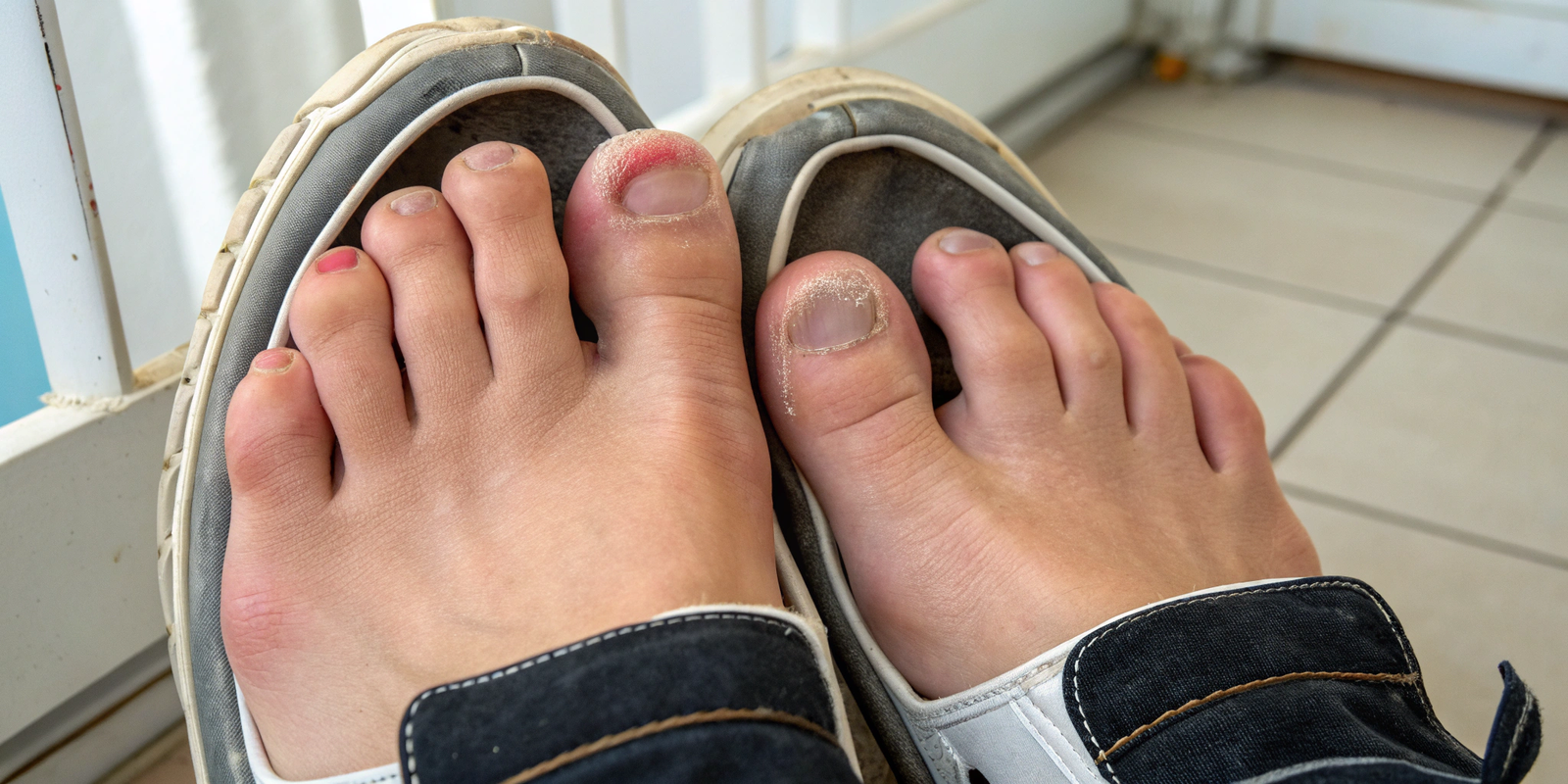
As someone who has been designing and developing footwear for over two decades at Lucas, I've seen countless foot shapes and listened to endless comfort complaints. My mission is to create amazing shoes, but sometimes, even with the best intentions, a certain design can clash with an individual's unique foot anatomy. It's a precise balance, and when your toes hurt, it's a clear sign that something isn't right with that particular shoe.
Why Your Toes Hurt Only in One Specific Pair of Shoes?
Are you perplexed why that one pair of shoes, perhaps a stylish heel or sleek sneaker from Lucas, causes your toes to ache while others don't? There are often very specific, subtle culprits behind this discomfort.
Your toes hurt only in one specific pair of shoes because of unique design elements like a narrow toe box, stiff materials, or internal construction flaws such as prominent seams, which create localized pressure points that other, better-fitting shoes avoid.
In my 20-plus years of crafting shoes, from ballerinas to boots, for markets all over the world, I've learned that comfort is paramount. At Lucas, we ensure our factories in Shaoxing are BSCI and SEDEX-certified, striving for the highest quality and compliance. Yet, even with all our efforts, specific shoe designs can still cause localized toe pain for some individuals. It's often due to subtle design choices or the inherent characteristics of a particular style.
Here's why that one pair might be giving your toes a hard time:
- Toe Box Shape and Volume:
- Explanation: The toe box is the front part of the shoe that encloses your toes. Shoes come in a vast array of toe box shapes—pointy, almond, square, round. Some also have less vertical room.
- Impact on Toes: If the toe box is too narrow (pinching from the sides), too shallow (pressing down on top), or simply doesn't match the natural splay of your toes, it can compress them front-to-back or side-to-side. This is a primary reason why my customers in Europe might find a sleek, fashionable heel painful, while a more forgiving sneaker feels fine.
- Material Rigidity:
- Explanation: The materials used for the upper of the shoe vary greatly in flexibility. Some leathers are very soft and pliable, while others, or high-gloss synthetics, can be quite stiff. A sturdy toe cap (the reinforcement at the very front of the shoe) can also be rigid.
- Impact on Toes: Stiff materials don't conform to your foot's shape as easily, creating unyielding pressure on the toes, particularly during movement when your foot naturally flexes. For example, some of our sturdy boots, while protective, might feel more restrictive than a soft canvas espadrille.
- Heel Height and Pitch:
- Explanation: The height of the heel and the "pitch" (the angle at which your foot sits inside the shoe) significantly affect how your body weight is distributed.
- Impact on Toes: Higher heels, especially those on my elegant Lucas heels, shift a greater percentage of your body weight forward onto the balls of your feet and toes. This increased pressure can lead to toe pain, especially if the toe box is already compromised.
- Lack of Proper Support or Cushioning:
- Explanation: Sometimes, the problem isn't direct pressure but insufficient support for the rest of your foot, which then transfers stress to your toes.
- Impact on Toes: If the shoe lacks adequate arch support or cushioning in the forefoot, your toes may be working harder to grip or stabilize, leading to fatigue and pain. This can be an issue even in some sneakers if they're not designed for your specific needs.
- Existing Foot Conditions:
- Explanation: Conditions like bunions, hammertoes, mallet toes, or tailor's bunions (bunionettes) make your toes exceptionally sensitive to pressure.
- Impact on Toes: A shoe that normally wouldn't bother someone might instantly cause excruciating pain if it puts even slight pressure on one of these sensitive areas. For example, a shoe with a perfectly acceptable toe box might become painful if it rubs against a developing bunion.
At Lucas, our mission is to deliver high-quality, fashionable footwear that inspires confidence and comfort. We integrate design, development, and manufacturing with a people-oriented approach, always aiming to minimize these issues. However, the unique anatomy of each foot means that sometimes, a shoe that looks perfect might not feel perfect. This feedback helps us continuously refine our designs and material choices to improve the wearing experience for all our customers in markets like America and South Africa.
Hidden Seams, Stitching, or Toe Cap Pressing Your Toes?
Have you ever wondered if the pain in your toes from certain shoes isn't just about the overall fit, but something more insidious lurking inside? Often, it's the hidden elements causing the trouble.
Hidden seams, stitching, or a rigid toe cap often press on your toes because these internal shoe components, while structurally necessary, can create localized friction or pressure points, especially in poorly designed shoes or if your foot anatomy is particularly sensitive.
During my product development days at Lucas, I've spent countless hours in our Shaoxing factories, scrutinizing shoe interiors. It's fascinating how a tiny, almost invisible detail inside a shoe can cause significant discomfort. Our product engineers pay close attention to the finishing of seams, especially in areas like the toe box. Customers might think the shoe is just too small, but often, the real villain is an internal irritant that others might not even notice. We work with BSCI and SEDEX-certified factories to ensure high quality, but sometimes, no amount of quality control can completely mitigate this for every foot.
Let’s explore these sneaky culprits:
- Internal Seams and Stitching:
- What they are: These are the places where different pieces of the shoe's upper material are joined together inside the shoe. While seams are necessary for construction, some can be bulky or stiff.
- How they cause pain: If a seam is located near a sensitive area of your toe (e.g., over a knuckle, near a bunion, or the side of the little toe) and is not finished smoothly, it can repeatedly rub or press against the skin. This constant friction can lead to irritation, blisters, or even bruising over time. For instance, in some of our more structured boots, the internal seams of the toe cap can be a concern.
- Rigid or Ill-Placed Toe Cap:
- What it is: The toe cap is a reinforced section at the very front of the shoe, designed to protect the toes and maintain the shoe's shape. It’s often a piece of stiff material (like thermoplastic or firm leather) inserted between the lining and the outer material.
- How it causes pain: If this toe cap is too stiff, too low, or starts too far back, it can compress the top of your toes or push them downwards. If its edge sits directly over a toe joint, it can create a constant pressure point with every step. I've seen this issue more in certain types of formal shoes or heavily structured sneakers.
- Lining Material and Finishing:
- What it is: The material that lines the inside of the shoe. While typically soft, sometimes the edge of the lining material, or where it's folded/glued, can create a ridge.
- How it causes pain: Even a small, stiff edge of a lining can rub against the delicate skin of the toes, similar to an internal seam.
- Material Overlaps or Inconsistent Padding:
- What they are: Sometimes, where different materials overlap during construction, or if internal padding is unevenly distributed, it creates a subtle lump or ridge.
- How they cause pain: These inconsistencies might not be obvious to the eye but can create localized pressure, especially when the foot flexes inside the shoe.
At Lucas, when we design footwear for our diverse global customer base, we implement rigorous quality control measures. For example, in our sneakers and sports shoes, we use seamless or flat-seam construction in critical areas like the toe box to minimize these issues. For our elegant heels and ballerinas, we select softer lining materials and ensure smooth internal finishes. Our commitment to quality and comfort means we're constantly refining these internal details, understanding that for our amazing shoes to truly inspire confidence and comfort, they must feel good against your skin, not just look good on your feet.
How do I stop shoes from hurting my toes?
Are you fed up with toe pain ruining your day in certain shoes? Don't despair! There are practical steps you can take to make your footwear comfortable again.
To stop shoes from hurting your toes, ensure proper fit by checking toe box width and depth, stretch tight areas, use orthotics or toe protectors for specific issues, address internal pressure points like seams, and select shoes with appropriate heel height and cushioning.
Through my extensive journey in footwear design and development at Lucas, I've had countless conversations with customers about toe pain. My goal is to ensure our high-quality, fashionable footwear brings joy, not agony. When I hear about toe discomfort, I immediately delve into problem-solving mode, remembering that even the most beautiful shoes, from our elegant heels to our casual sandals, must prioritize comfort.
Here are my top recommendations to prevent and alleviate toe pain in your shoes:
- Re-evaluate Shoe Fit (Most Important):
- Check Toe Box Width: Ensure there's ample room for your toes to splay naturally, especially your pinky toe. They shouldn't be squeezed from the sides.
- Check Toe Box Depth: Make sure there's enough vertical space above your toes so they aren't pressed down, particularly at the highest point of your big toe or if you have hammertoes.
- Forefoot Width: Your forefoot (the ball of your foot) should fit snugly but not tightly. Look for shoes with a shape that matches your foot's natural contour.
- Rule of Thumb: There should be at least a thumb's width of space between your longest toe and the end of the shoe when standing.
- Stretch or Break In Troubled Shoes:
- Professional Stretching: Take your shoes to a cobbler. They have specialized stretching tools that can target specific areas (like the toe box) to create more room.
- At-Home Stretching (Caution): For certain materials like leather, you can use shoe stretchers or wear thick socks and gently warm the tight spots with a hairdryer while flexing your foot. Be very careful with heat, as it can damage some materials.
- Wear Gradually: Break in new shoes by wearing them for short periods, gradually increasing wear time.
- Address Internal Pressure Points:
- Padded Linings/Moleskin: If a specific seam or stitch is rubbing, try applying moleskin or a small, soft felt pad over that area inside the shoe or directly on your toe.
- Seamless Socks: Opt for socks with flat or invisible seams to reduce internal friction.
- Toe Caps: If the toe cap is the issue, professional stretching might help, or a cobbler might be able to soften it.
- Use Toe Protection and Support:
- Toe Spacers/Separators: Silicone or gel toe spacers can gently realign toes and prevent rubbing between them.
- Gel Toe Caps/Sleeves: These can cushion the tops or ends of toes, especially if you have hammertoes or mallet toes that rub against the top of the shoe.
- Metatarsal Pads: If pain is under the ball of your foot, a metatarsal pad can help redistribute pressure away from the toes.
- Reconsider Shoe Style and Heel Height:
- Lower Heels: For everyday wear, choose shoes with lower heels (1-2 inches) to reduce forefoot pressure.
- Rounded/Wider Toe Boxes: Prioritize shoes with more accommodating toe box shapes. While Lucas offers stylish pointy heels, for extended wear, a rounder toe is often more comfortable.
- Flexible Soles: Ensure the sole has some flexibility, especially at the ball of the foot, to allow natural foot movement.
At Lucas, our commitment to people-first values means we want our customers to walk confidently and comfortably. Using these tips in conjunction with our high-quality GRS-certified and BCI-member shoes will ensure that your footwear experience is as amazing as the shoes themselves, whether you're sporting our trendy sneakers or classic ballerinas.
Should I size up if my toes hurt?
Are your toes aching in your current shoes, leaving you wondering if simply going up a size is the answer? It's a common thought, but it's not always the best solution.
You should size up if your toes hurt due to overall shoe length being too short or if the toe box is too shallow. However, if the pain is due to width or internal pressure points, sizing up might not solve the problem and could introduce new issues like slippage or lack of support.
As the head of design and development at Lucas, I've guided countless customers through shoe sizing dilemmas. My goal is to equip you with amazing shoes that fit perfectly. We, at Lucas, take pride in working with BSCI and SEDEX-certified factories to produce high-quality footwear, but the perfect fit is very personal. Simply sizing up isn't always the magic bullet, and it’s important to understand why.
Here's when sizing up might be a good idea, and when it might not:
When Sizing Up Might Help:
- Your Longest Toe is Hitting the End: If your longest toe (which isn't always your big toe!) constantly bumps or presses against the very front of the shoe, then yes, you likely need more length. A thumb's width of space from your longest toe to the end of the shoe is generally recommended.
- Overall Shoe is Too Short: If the shoe feels generally cramped in length across your entire foot, pushing your toes together, then a size increase will give you the necessary extra room.
- Toe Box is Too Shallow: If your toes feel compressed vertically (top to bottom), especially if you have hammertoes, a slightly larger size might offer a touch more depth in the toe box. While not guaranteed, some shoes gain a bit of vertical space with increased length.
When Sizing Up Will NOT Solve the Problem (and might create new ones):
- Pain is Due to Width: If your toes are being pinched from the sides, and the shoe's width is the issue, going up in length will likely just make the shoe too long. You'll end up with extra space at the front, but your forefoot will still be squeezed. In this case, you need a wider shoe, not a longer one. At Lucas, we try to offer various width options where possible.
- Pain from Internal Seams/Construction: If a specific internal seam, stitch, or rigid toe cap is causing localized pressure (as we discussed earlier), a larger size won't necessarily change the placement or harshness of that internal feature. It requires a different solution, like padding or targeted stretching.
- Heel Slippage: If you size up purely for toe comfort, you might find your heel starts slipping in and out of the shoe. This can cause blisters on the heel and an unstable walking experience.
- Arch/Instep Mismatch: A shoe that's too long might mean the arch support lands in the wrong place on your foot, or the instep (the top of your foot) doesn't feel secure, leading to other discomforts.
- Increased Trip Hazard: Shoes that are too long can cause you to trip more easily, especially if the extra length at the front catches on surfaces.
At Lucas, when you try on our diverse range, from our sporty sneakers to our elegant heels, I always recommend prioritizing width and overall comfort over just length. If your toes hurt, first consider if the shoe has enough overall width and forefoot volume. If it doesn't, a different shoe shape or a wide-fitting option (if available) is often a better choice than simply going up in size. Our mission is to ensure every pair of Lucas shoes you own not only looks amazing but feels amazing too, from your heel to your longest toe.
To solve toe pain, go up a size if the shoe is too short overall, but prioritize proper width and addressing specific pressure points over simply increasing length for a lasting solution.