
Outsole Materials: Rubber, TPU, TPR, and Multi-Layer Soles
Are you often left wondering what kind of sole would be best for your shoes, or why different shoes feel so different underfoot, perhaps even struggling with shoes that lack grip or wear out too quickly? The material of a shoe's outsole dramatically impacts its performance, durability, and comfort.
When comparing rubber, TPU, and TPR for shoe soles, each material offers distinct advantages in terms of grip, durability, weight, and flexibility. Rubber is renowned for its excellent grip and shock absorption, while TPU stands out for its abrasion resistance and lightweight nature. TPR provides a good balance of flexibility and moderate durability at a lower cost, making it a versatile option across various footwear types.
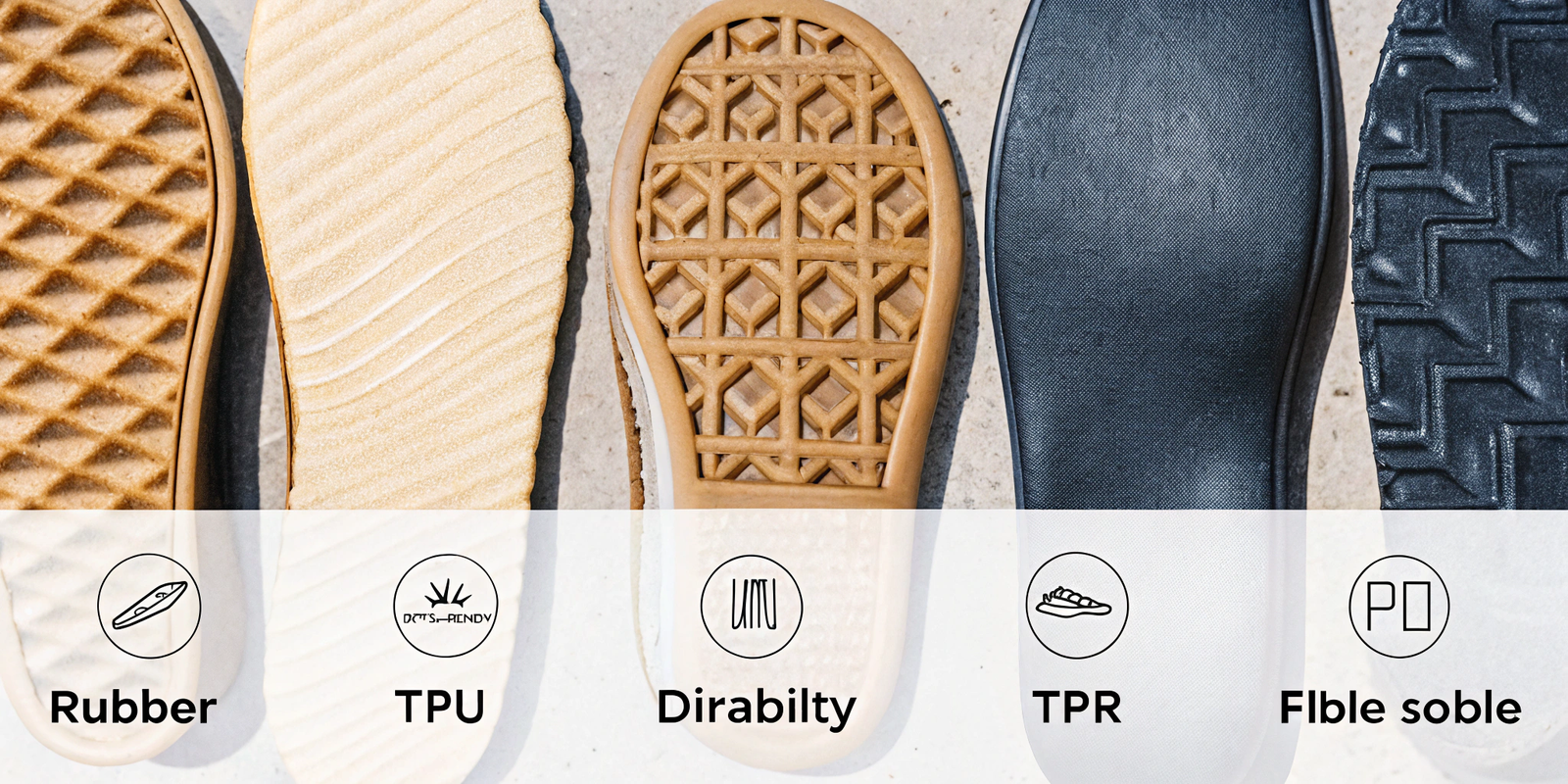 Rubber vs TPU vs TPR shoe soles comparison
Are you unsure how different shoe sole materials like rubber, TPU, and TPR stack up against each other, making it hard to choose footwear that truly meets your needs for durability, grip, or flexibility? Understanding the key differences is crucial for making informed shoe choices.
When comparing rubber, TPU, and TPR shoe soles, each material excels in distinct areas. Rubber offers superior grip, especially in wet conditions, and excellent shock absorption, though it can be heavier. TPU (Thermoplastic Polyurethane) is recognized for its exceptional abrasion resistance, lightweight feel, and good flexibility, making it durable and versatile. TPR (Thermoplastic Rubber) blends rubber's elasticity with plastic's moldability, providing good flexibility, moderate durability, and a comfortable feel at a typically lower cost, suitable for a wide range of everyday shoes.
Rubber vs TPU vs TPR shoe soles comparison
Are you unsure how different shoe sole materials like rubber, TPU, and TPR stack up against each other, making it hard to choose footwear that truly meets your needs for durability, grip, or flexibility? Understanding the key differences is crucial for making informed shoe choices.
When comparing rubber, TPU, and TPR shoe soles, each material excels in distinct areas. Rubber offers superior grip, especially in wet conditions, and excellent shock absorption, though it can be heavier. TPU (Thermoplastic Polyurethane) is recognized for its exceptional abrasion resistance, lightweight feel, and good flexibility, making it durable and versatile. TPR (Thermoplastic Rubber) blends rubber's elasticity with plastic's moldability, providing good flexibility, moderate durability, and a comfortable feel at a typically lower cost, suitable for a wide range of everyday shoes.
Unpacking the Outsole: Rubber, TPU, and TPR Explained
Choosing an outsole is a careful balance of properties. Let's break down where each material shines.
-
1. Rubber Outsoles: The Traditional Workhorse
-
What it is: Rubber, either natural or synthetic (like SBR – Styrene Butadiene Rubber), is perhaps the most common and oldest material for shoe outsoles.
-
Key Characteristics:
-
Excellent Grip: Rubber is famed for its high coefficient of friction, providing superb traction on various surfaces, especially wet ones. Different rubber compounds can be formulated for specific conditions (e.g., sticky rubber for climbing shoes, harder rubber for hiking).
-
Durability (Variable): Durability can vary widely depending on the type and hardness of the rubber. Harder rubber lasts longer but offers less grip; softer rubber grips better but wears faster.
-
Shock Absorption: Rubber naturally absorbs impact, contributing to cushioning and comfort.
-
Flexibility: It offers good flexibility, allowing the foot to move naturally.
-
Weight: Generally heavier than TPU or TPR, especially in thicker applications needed for cushioning or ruggedness.
-
Temperature Performance: Performs well across a range of temperatures, resisting cracking in cold and melting in heat better than some plastics.
-
Best Uses: Running shoes (especially trail and road), hiking boots, work boots, casual sneakers, where grip and cushioning are paramount.
-
My Lucas Experience: For our more rugged boots and high-performance casual sneakers, I often lean towards specialized rubber compounds. I've seen firsthand how a well-engineered rubber sole can provide confidence on slippery surfaces. The trade-off is often weight, but for specific needs, it's unbeatable.
-
2. TPU Outsoles: The Modern All-Rounder
-
What it is: Thermoplastic Polyurethane (TPU) is a type of plastic that sits in the sweet spot between rubber and hard plastics. It combines the elasticity of rubber with the thermoformability of plastics.
-
Key Characteristics:
-
Excellent Abrasion Resistance: TPU is incredibly hard-wearing and resistant to scuffs and cuts, making it very durable.
-
Lightweight: Significantly lighter than rubber, which is a major advantage for athletic or fashion footwear.
-
Good Flexibility: Offers good flex properties, allowing for comfortable movement.
-
Moderate Grip: While not as grippy as specialized rubber compounds, it provides decent traction on most dry surfaces. It can be less effective on very wet or icy conditions due to its harder surface.
-
Temperature Performance: Good performance, though it can become a bit stiffer in very cold temperatures.
-
Design Versatility: Can be molded into intricate designs and often has a sleeker, more modern aesthetic. Can be dyed in a variety of colors.
-
Best Uses: Football (soccer) cleats (studs are often TPU), fashion sneakers, lighter hiking shoes, dress shoes, as it offers a great balance of durability, lightweight, and aesthetics.
-
My Lucas Experience: When I'm working on a lightweight athletic shoe or a sleek, modern fashion shoe, TPU is often my first choice for the outsole. Its ability to be molded into complex designs allows for innovative sole patterns that balance aesthetics with performance. We use it frequently in applications where weight reduction is a priority without sacrificing too much durability.
-
3. TPR Outsoles: The Cost-Effective & Flexible Option
-
What it is: Thermoplastic Rubber (TPR) is a blend of plastic and rubber polymers. It combines the processing ease of thermoplastics with some of the properties of rubber.
-
Key Characteristics:
-
Good Flexibility: Very flexible, offering good comfort for everyday wear.
-
Moderate Durability: Generally less abrasion-resistant than TPU or harder rubbers, but still offers decent lifespan for casual use.
-
Lightweight: Lighter than most rubber soles, though often slightly heavier than TPU.
-
Moderate Grip: Provides adequate grip for everyday conditions but can be slippery on very wet or smooth surfaces.
-
Cost-Effective: Typically the most economical option among the three, making it popular for mass-produced footwear.
-
Good Moldability: Can be easily molded into various designs, often used for unit soles (where the outsole and sometimes midsole are a single molded piece).
-
Best Uses: Children's shoes, casual flats, affordable sneakers, sandals, and light-duty boots, where flexibility, comfort, and cost-effectiveness are key.
Comparative Summary Table
To make it easier to compare, here's a quick breakdown of their typical performance:
| Feature | Rubber Outsoles | TPU Outsoles | TPR Outsoles | My Lucas Take |
|---|---|---|---|---|
| Grip (Traction) | Excellent (especially wet) | Good (dry), Moderate (wet/icy) | Moderate (general use) | "Best for ultimate grip, particularly in demanding conditions." |
| Durability (Abrasion) | Variable (depends on hardness/compound) | Excellent (highly resistant to wear) | Moderate (suitable for casual wear) | "TPU wins for sheer wear resistance in a lightweight package." |
| Weight | Heavier | Lightweight | Lightweight to Moderate | "TPU is key when every gram counts for agility." |
| Flexibility | Good | Good | Excellent | "TPR provides that instant, comfortable bend for everyday shoes." |
| Shock Absorption | Excellent | Moderate | Moderate | "Rubber still king for significant impact absorption." |
| Cost | Moderate to High (depending on compound) | Moderate to High | Low to Moderate | "TPR is ideal for value without totally sacrificing feel." |
| Temperature | Good range, resistant | Can stiffen in extreme cold | Can stiffen in cold, soften in extreme heat | "Rubber is generally more stable across temperature extremes." |
| Key Advantage | Superior traction & cushioning | High abrasion resistance & lightweight | Excellent flexibility & cost-effectiveness | "Choose based on the shoe's primary function and required performance." |
Conclusion Rubber, TPU, and TPR each offer distinct benefits for shoe outsoles. Rubber excels in grip and shock absorption, TPU leads in lightweight durability and abrasion resistance, while TPR offers good flexibility and cost-effectiveness for various applications.