
Are you constantly frustrated by unsightly creases appearing on your beloved leather shoes, diminishing their pristine look and making them appear older than they are? Creases are a common problem for leather shoe owners, but they don't have to be inevitable. To prevent creases in leather shoes, the most effective methods involve consistent care and proper storage. Always use well-fitting shoe trees immediately after wearing to maintain the shoe's original shape and absorb moisture. Regularly condition and moisturize the leather to keep it supple and flexible, reducing its tendency to crack or crease. Additionally, ensure you purchase shoes with a proper fit, as ill-fitting shoes tend to crease more easily, and rotate your footwear to give each pair time to rest and recover its shape between wears. At Lucas, where we meticulously craft leather footwear, I've learned that preventing creases is as much about daily habits as it is about initial quality. I always tell our customers that a little proactive care goes a long way in preserving the beauty and longevity of their shoes.
Use Shoe Trees or Shoe Stretchers
Are you noticing an increasing number of lines and wrinkles on your favorite leather shoes, causing them to lose their crisp, new appearance even after just a few wears? Neglecting to maintain your shoes' shape after wearing is a primary culprit for premature creasing.
Using shoe trees or shoe stretchers is by far one of the most effective ways to prevent creases in leather shoes because they help maintain the shoe's original shape, smooth out minor wrinkles, and absorb moisture from the leather. Shoe trees, ideally cedar ones, should be inserted immediately after wearing while the leather is still warm and pliable, as they gently push out the toe box and instep area, preventing the leather from collapsing and forming deep creases. Shoe stretchers can also serve a similar purpose, particularly if a shoe needs minor width or length adjustment.
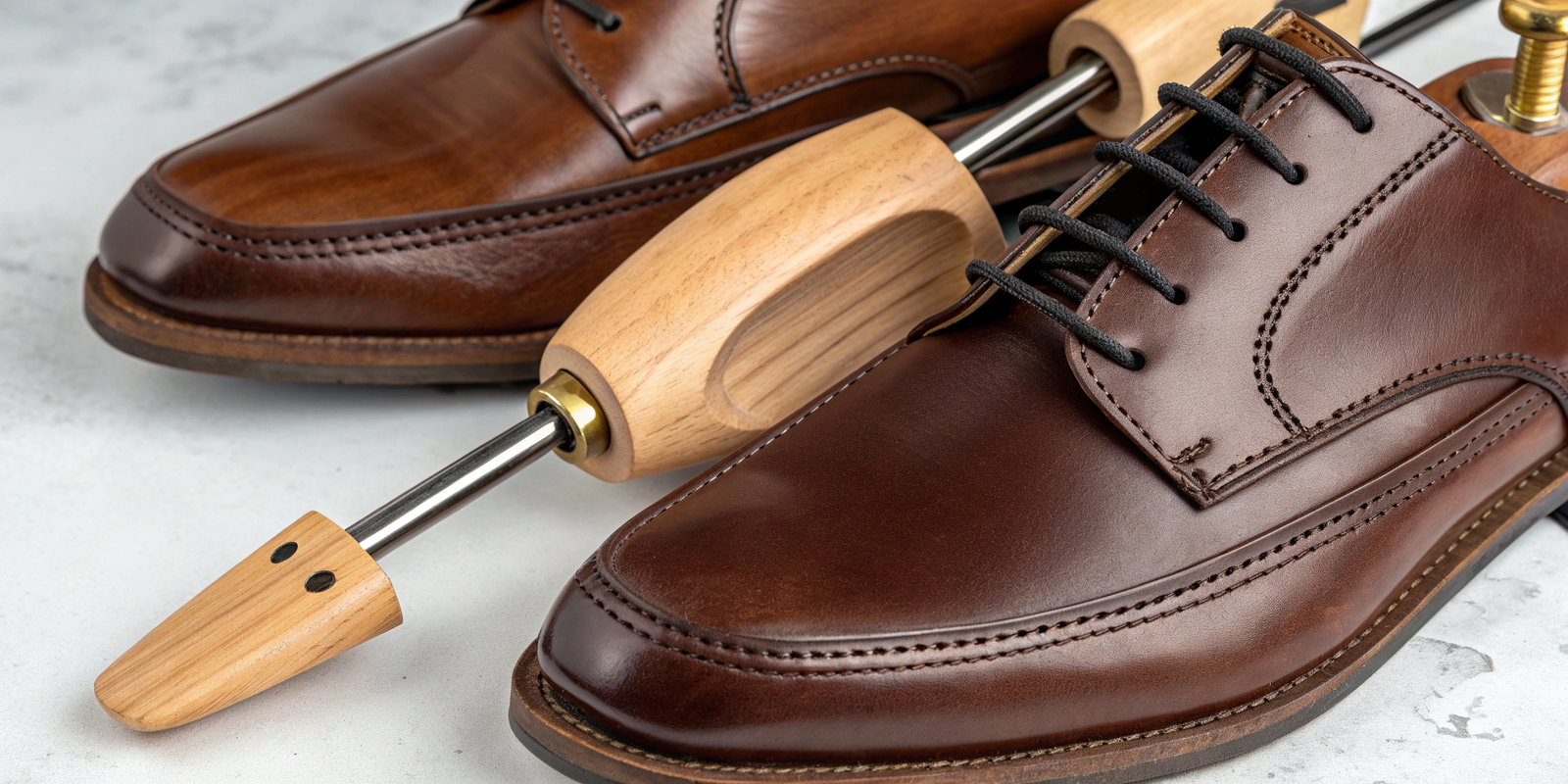 In my years at Lucas, seeing countless pairs of leather shoes, I've come to understand that shoe trees are not a luxury; they are an essential tool. I use them for all my quality leather shoes, and I see a remarkable difference in how my shoes hold their shape over time.
The Power of Shoe Trees and Stretchers: Your Best Defense Against Creases
Imagine your leather shoes as a building. A shoe tree is like the internal scaffolding that keeps the structure upright and prevents it from slouching or collapsing.
-
1. Shoe Trees: The Unsung Heroes of Shoe Care
- What they are: These are devices, usually made of cedar wood or plastic, that you insert into your shoes when you're not wearing them.
- How they work:
- Maintain Shape: They gently fill the shoe, pushing out the toe box and supporting the arch. This prevents the leather from creasing where your foot bends naturally.
- Absorb Moisture: Cedar shoe trees are particularly effective here. Leather absorbs moisture from your feet and the environment. This moisture, if left to dry naturally without support, can cause the leather to stiffen and set into creases. Cedar absorbs this moisture, helping the leather dry evenly.
- Deodorize: Cedar also has natural deodorizing properties, keeping your shoes fresh.
- When to use them: The most crucial time is immediately after wearing your shoes. The leather is still warm and pliable from your body heat and movement. Inserting the shoe tree then allows the leather to dry and set back into its original, smooth shape.
- Types:
- Spring-loaded (coil spring) cedar shoe trees: These are common and good for basic shape retention.
- Adjustable twin-tube cedar shoe trees: These offer better heel support and are generally considered superior for higher-quality shoes as they distribute pressure more evenly.
- Plastic shoe trees: More affordable, but don't offer moisture absorption or deodorizing benefits. Better than nothing, but cedar is preferred.
- My Lucas Experience: For every pair of high-quality leather shoes we produce at Lucas, I recommend a good pair of cedar shoe trees. I often hear from customers who follow this advice how much longer their shoes look new. It’s a small investment that truly pays off in longevity.
-
2. Shoe Stretchers: Beyond Just Stretching
- What they are: Primarily designed to stretch shoes that are too tight in certain areas (e.g., width, bunion spots). They can be simple devices or more complex with targeted plugs.
- How they can prevent creases: While primarily for stretching, a well-placed shoe stretcher can also help maintain the overall shape of the shoe, particularly if you have an area that consistently creases due to a tight fit. By subtly expanding a specific area, it might prevent the leather from buckling elsewhere.
- Important Note: Shoe stretchers are generally used for targeted problems, not as a daily ritual like shoe trees. Over-stretching can damage the leather.
- My Advice: If a shoe consistently creases in an unusual spot, it might be an indication of a poor fit. A shoe stretcher might help alleviate tension, but often a better-fitting shoe is the ultimate solution. We focus on providing accurate sizing at Lucas to minimize these issues.
-
3. Proper Fit is Key for Crease Prevention
- Too tight: Shoes that are too tight will be under constant strain, causing the leather to buckle and crease severely, especially across the vamp (the top part of the foot).
- Too loose: Shoes that are too loose allow your foot to slide around, creating friction and causing the leather to collapse and crease in irregular patterns.
- The Sweet Spot: A well-fitting shoe allows for natural foot movement without excessive strain or slippage. This reduces the stress on the leather, making it less prone to deep, unnatural creases.
- Lucas's Commitment: We emphasize proper sizing and fit guides on our website and through our customer service. I know from experience that a perfectly fitting shoe is happier, and so is its owner.
By consistently using shoe trees, especially cedar ones, right after wearing, and ensuring your shoes fit correctly, you're giving your leather footwear the best possible chance to remain smooth and crease-free for years to come.
Quick Fixes for Existing Creases
Even with the best preventative measures, sometimes creases happen. Don't despair! There are methods to reduce their appearance and restore some of your shoe's former glory. These are not permanent removals, but they can significantly improve the look.
-
1. Ironing with Steam (Use with Extreme Caution):
- What it does: The combination of heat and moisture from steam can help relax the leather fibers, allowing them to flatten out.
- How to do it:
- Insert a Shoe Tree: Make sure a snug-fitting shoe tree is in the shoe to provide internal support.
- Damp Cloth: Place a clean, slightly damp cloth (not soaking wet) over the creased area.
- Low Heat Iron: Set an iron to a low/medium heat (NO steam function on the iron itself, unless you are very experienced and know your shoe's leather, typically for delicate leather you avoid direct steam). Test on an inconspicuous area first.
- Gentle Pressure: Gently iron over the damp cloth, applying light, even pressure in short bursts. Keep the iron moving to avoid burning or damaging the leather.
- Check Progress: Lift the cloth periodically to check the crease. Repeat if necessary, but don't overdo it.
- Important Caveats: This method carries risks. Too much heat or direct iron contact can burn, dry out, or permanently damage the leather. It's best used as a last resort and with extreme care. I've seen customers ruin good shoes attempting this too aggressively.
- My Lucas Advice: I’d only recommend this for very smooth, sturdy leather, and never for suede, nubuck, patent leather, or delicate finishes. Always test first.
-
2. Leather Conditioner or Moisturizer (Nourish and Smooth):
- What it does: Dry leather is more prone to creasing and cracking. A good conditioner replenishes the natural oils in the leather, making it more supple and flexible. This can help minor creases become less prominent, as the leather becomes softer and can "relax" more easily.
- How to do it:
- Clean the Shoe: Ensure the shoe is clean and free of dirt.
- Apply Conditioner: Apply a small amount of high-quality leather conditioner or moisturizer (cream-based is often best) to a clean cloth.
- Rub in Circular Motions: Gently rub the conditioner into the creased area (and the rest of the shoe). Allow the leather to absorb it.
- Buff: After allowing it to dry, buff gently with a clean cloth.
- Benefits: This is a much safer, gentler method than ironing. It's more about improving the overall health and appearance of the leather, which in turn can soften existing creases. Regular conditioning should be part of your routine anyway, both for prevention and minor fixes.
- Lucas Recommendation: We always advise customers to invest in a good leather conditioner. It's like skincare for your shoes. It won't erase deep creases instantly, but it can make a significant difference over time, especially when combined with shoe trees.
-
3. Stuffing the Shoe Tightly (Manual Shaping):
- What it does: Similar to a shoe tree, tightly stuffing the shoe with crumpled newspaper or tissue paper can help push out creases, especially in the toe box. The paper also absorbs moisture.
- How to do it:
- Crumple Paper: Crumple paper tightly, ensuring there are no sharp edges that could poke the leather.
- Stuff Firmly: Stuff the entire shoe firmly, paying particular attention to the creased areas, filling it to its original shape.
- Leave Overnight: Leave it stuffed overnight, or longer if needed.
- Benefits: This is a safe and accessible method if you don't have shoe trees. It's particularly effective after cleaning and conditioning, as the leather will be more pliable.
- My Tip: I've often used this when traveling without shoe trees. It works, but remember, newspaper ink can sometimes transfer to light-colored linings, so use plain tissue paper if possible.
| Crease Management Stage | Strategy/Method | Primary Action | Goal | My Lucas Takeaway |
|---|---|---|---|---|
| Prevention (Most Important) | Use Shoe Trees (Cedar) | Insert immediately after wearing. | Maintain shape, absorb moisture, deodorize. | "Absolutely essential for longevity, a small investment." |
| Regular Leather Conditioning | Apply moisturizer frequently. | Keep leather supple, flexible, prevent dryness. | "Like skincare for your shoes, always do it." | |
| Proper Fit | Ensure shoes are neither too tight nor too loose. | Reduce strain and natural buckling of leather. | "The foundation of comfortable, durable footwear." | |
| Shoe Rotation | Don't wear the same pair daily. | Allow shoes to rest, dry, and regain shape. | "Gives your shoes a break, extends their life." | |
| Fixing Existing Creases (Cautionary) | Ironing with Steam | Gently iron over a damp cloth with low heat. | Relax leather fibers, flatten creases. | "Use extreme caution; for smooth, sturdy leather only." |
| Leather Conditioner/Moisturizer | Apply to creased area, rub in gently. | Soften appearance of creases, improve leather health. | "A safe, ongoing method for subtle improvement." | |
| Stuffing Shoes Tightly | Fill with paper (e.g., newspaper, tissue paper). | Manually push out creases, absorb moisture. | "Good alternative when shoe trees aren't available." |
Conclusion To prevent creases in leather shoes, consistently use cedar shoe trees immediately after wearing and regularly condition the leather. For existing creases, gentle conditioning or careful ironing can improve their appearance, though prevention is always key for maintaining pristine footwear.