
Are you constantly frustrated by unsightly creases appearing on your beloved leather shoes, diminishing their pristine look and making them appear older than they are? Creases are a common problem for leather shoe owners, but they don't have to be inevitable.
To prevent creases in leather shoes, the most effective methods involve consistent care and proper storage. Always use well-fitting shoe trees immediately after wearing to maintain the shoe's original shape and absorb moisture. Regularly condition and moisturize the leather to keep it supple and flexible, reducing its tendency to crack or crease. Additionally, ensure you purchase shoes with a proper fit, as ill-fitting shoes tend to crease more easily, and rotate your footwear to give each pair time to rest and recover its shape between wears.
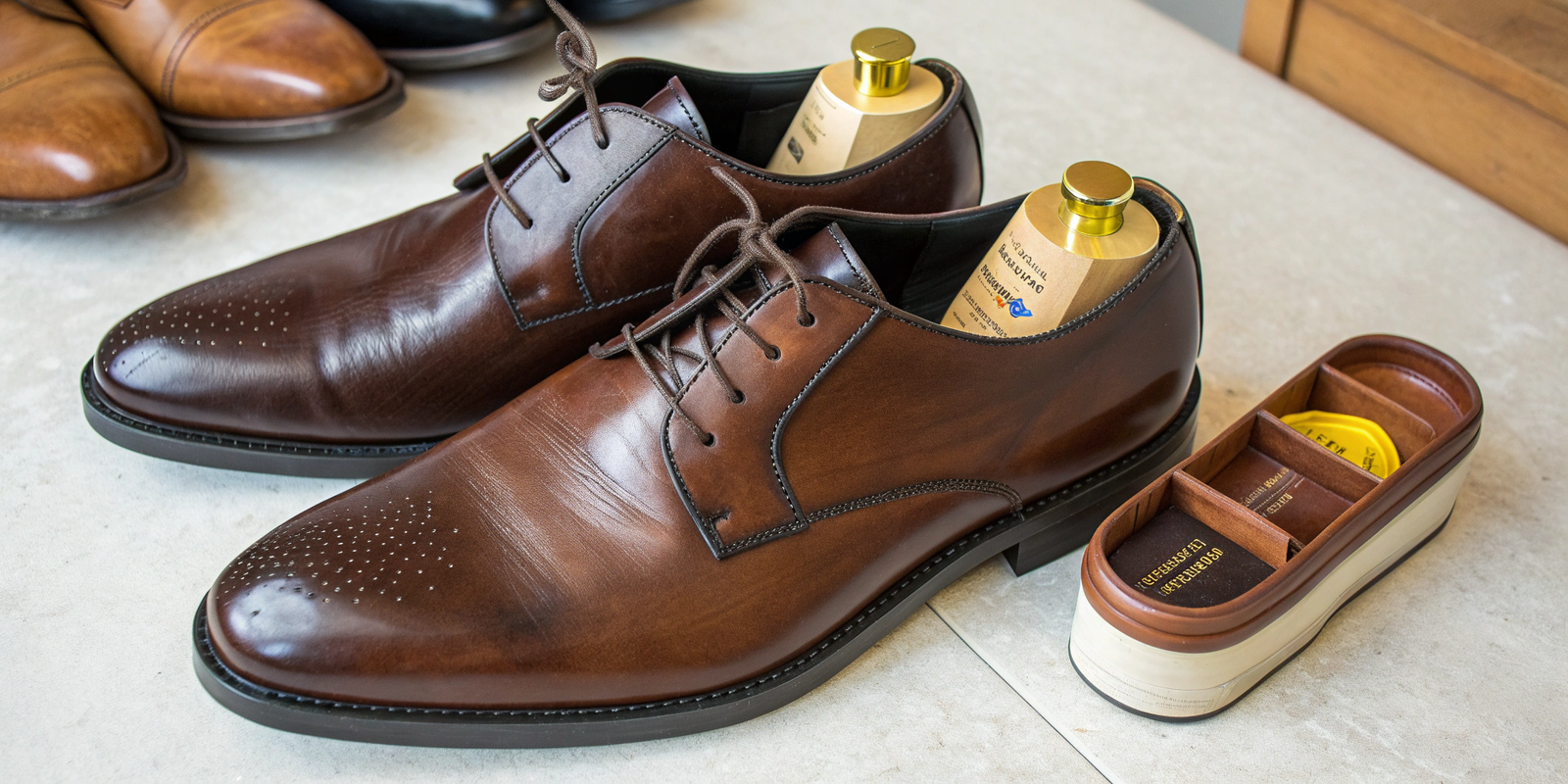 At Lucas, where we meticulously craft leather footwear, I've learned that preventing creases is as much about daily habits as it is about initial quality. I always tell our customers that a little proactive care goes a long way in preserving the beauty and longevity of their shoes.
Use Shoe Trees or Shoe Stretchers
Are you noticing an increasing number of lines and wrinkles on your favorite leather shoes, causing them to lose their crisp, new appearance even after just a few wears? Neglecting to maintain your shoes' shape after wearing is a primary culprit for premature creasing.
Using shoe trees or shoe stretchers is by far one of the most effective ways to prevent creases in leather shoes because they help maintain the shoe's original shape, smooth out minor wrinkles, and absorb moisture from the leather. Shoe trees, ideally cedar ones, should be inserted immediately after wearing while the leather is still warm and pliable, as they gently push out the toe box and instep area, preventing the leather from collapsing and forming deep creases. Shoe stretchers can also serve a similar purpose, particularly if a shoe needs minor width or length adjustment.
In my years at Lucas, seeing countless pairs of leather shoes, I've come to understand that shoe trees are not a luxury; they are an essential tool. I use them for all my quality leather shoes, and I see a remarkable difference in how my shoes hold their shape over time.
The Power of Shoe Trees and Stretchers: Your Best Defense Against Creases
Imagine your leather shoes as a building. A shoe tree is like the internal scaffolding that keeps the structure upright and prevents it from slouching or collapsing.
-
1. Shoe Trees: The Unsung Heroes of Shoe Care
- What they are: These are devices, usually made of cedar wood or plastic, that you insert into your shoes when you're not wearing them.
- How they work:
- Maintain Shape: They gently fill the shoe, pushing out the toe box and supporting the arch. This prevents the leather from creasing where your foot bends naturally.
- Absorb Moisture: Cedar shoe trees are particularly effective here. Leather absorbs moisture from your feet and the environment. This moisture, if left to dry naturally without support, can cause the leather to stiffen and set into creases. Cedar absorbs this moisture, helping the leather dry evenly.
- Deodorize: Cedar also has natural deodorizing properties, keeping your shoes fresh.
- When to use them: The most crucial time is immediately after wearing your shoes. The leather is still warm and pliable from your body heat and movement. Inserting the shoe tree then allows the leather to dry and set back into its original, smooth shape.
- Types:
- Spring-loaded (coil spring) cedar shoe trees: These are common and good for basic shape retention.
- Adjustable twin-tube cedar shoe trees: These offer better heel support and are generally considered superior for higher-quality shoes as they distribute pressure more evenly.
- Plastic shoe trees: More affordable, but don't offer moisture absorption or deodorizing benefits. Better than nothing, but cedar is preferred.
- My Lucas Experience: For every pair of high-quality leather shoes we produce at Lucas, I recommend a good pair of cedar shoe trees. I often hear from customers who follow this advice how much longer their shoes look new. It’s a small investment that truly pays off in longevity.
-
2. Shoe Stretchers: Beyond Just Stretching
- What they are: Primarily designed to stretch shoes that are too tight in certain areas (e.g., width, bunion spots). They can be simple devices or more complex with targeted plugs.
- How they can prevent creases: While primarily for stretching, a well-placed shoe stretcher can also help maintain the overall shape of the shoe, particularly if you have an area that consistently creases due to a tight fit. By subtly expanding a specific area, it might prevent the leather from buckling elsewhere.
- Important Note: Shoe stretchers are generally used for targeted problems, not as a daily ritual like shoe trees. Over-stretching can damage the leather.
- My Advice: If a shoe consistently creases in an unusual spot, it might be an indication of a poor fit. A shoe stretcher might help alleviate tension, but often a better-fitting shoe is the ultimate solution. We focus on providing accurate sizing at Lucas to minimize these issues.
-
3. Proper Fit is Key for Crease Prevention
- Too tight: Shoes that are too tight will be under constant strain, causing the leather to buckle and crease severely, especially across the vamp (the top part of the foot).
- Too loose: Shoes that are too loose allow your foot to slide around, creating friction and causing the leather to collapse and crease in irregular patterns.
- The Sweet Spot: A well-fitting shoe allows for natural foot movement without excessive strain or slippage. This reduces the stress on the leather, making it less prone to deep, unnatural creases.
- Lucas's Commitment: We emphasize proper sizing and fit guides on our website and through our customer service. I know from experience that a perfectly fitting shoe is happier, and so is its owner.
By consistently using shoe trees, especially cedar ones, right after wearing, and ensuring your shoes fit correctly, you're giving your leather footwear the best possible chance to remain smooth and crease-free for years to come.
Can leather shoes be completely crease-free? Are you constantly striving for that perfectly smooth, unblemished leather surface on your shoes, only to find new creases appearing despite your best efforts? The reality of leather as a natural material often clashes with the desire for a completely crease-free appearance. No, leather shoes cannot be completely crease-free because leather is a natural material designed to be flexible and mold around the foot's movement. Anytime you walk, your foot flexes, causing the leather over the vamp to bend and create natural creases. While proper care, such as using shoe trees and conditioners, can significantly minimize and soften these creases, it's impossible to eliminate this natural characteristic of leather, which actually contributes to the shoe's unique patina over time.
As someone who has worked with leather for decades at Lucas, I understand the desire for pristine shoes. However, it's important to set realistic expectations. Leather is a living material, and its beauty lies partly in its ability to age and develop character.
The Inevitable Embrace of Creases: Understanding Leather's Nature
Think of leather like your own skin. It stretches, it folds, and with movement, it develops lines. This is a fundamental aspect of the material, not a flaw.
-
1. Leather is Skin, Not Plastic:
- Natural Flexibility: Leather is derived from animal hide, which is inherently flexible and designed to move with the body. When used in shoes, it retains this property. Every time you take a step, your foot bends at the ball, causing the shoe's upper (especially the vamp, the area over your toes and instep) to flex and fold.
- Micro-Fibers: Leather is made up of millions of collagen fibers that interlock. When these fibers bend, they don't perfectly spring back to a completely flat state every single time. They begin to form memory, creating lines and wrinkles.
- My Observation: At Lucas, when we examine raw leather, you can see its natural texture and elasticity. This is what makes it comfortable and durable for footwear, but also what makes it prone to creasing. It will always bend where your foot bends.
-
2. The Impact of Movement:
- Every Step Counts: Even a short walk will cause the leather to crease. The more you wear your shoes, the more they will crease. This is unavoidable as long as you use your shoes for their intended purpose – walking.
- Foot's Flex Point: The primary creasing area is usually across the vamp, precisely where your foot flexes most. The type and severity of creases depend on your individual gait, foot shape, and how the shoe fits.
- Lucas's Design Philosophy: We design our shoes to accommodate natural foot movement. We use quality leather that can handle this flexion without cracking, but we know it will crease. Our goal is to make sure those creases are graceful, not destructive.
-
3. What You Can (and Can't) Control:
- You Can Minimize and Soften:
- Proper Fit: As mentioned before, a shoe that fits well will crease "better"—meaning the creases will be more uniform and less severe. A shoe that's too loose will buckle unevenly, creating jagged, deep creases.
- High-Quality Leather: Full-grain leather, often found in higher-end shoes like those from Lucas, tends to develop a richer, more attractive patina with wear, and its creases often look more natural and less harsh than those on poor-quality, corrected-grain leather.
- Consistent Care (Shoe Trees, Conditioning): This is your best weapon. Shoe trees help the leather return closer to its original shape, while conditioning keeps it supple, preventing cracking within the creases.
- Rotation: Giving shoes a day or two between wears allows the leather to fully dry and for shoe trees to do their work, making creases less pronounced.
- You Cannot Eliminate: No matter how expensive the shoe or how meticulous your care, if you wear leather shoes, they will develop creases. It's a natural part of their life cycle and contributes to their character.
- My Perspective: I tell customers that creases are a sign of a well-loved, well-worn pair of shoes. They tell a story. The goal is not zero creases, but to ensure those creases are subtle, even, and contribute to the shoe's unique aging process, rather than detracting from its appearance.
- You Can Minimize and Soften:
The Role of Patina: Embracing the Evolution of Leather
Instead of fighting every crease, it's helpful to understand the concept of "patina" and how creases contribute to it.
-
1. What is Patina?
- Definition: Patina is the gradual change in color, texture, and sheen that develops on leather (and other materials) over time through wear, exposure, and handling. It's a beautiful sign of age and use.
- How Creases Contribute: Creases are an integral part of patina. The leather bends, and over time, the color might deepen slightly in those areas, or the texture might become smoother. These variations create a unique character that cannot be replicated artificially.
- My Experience: I've seen customers at Lucas return after years, showing off their leather shoes that have developed a rich, unique patina. The creases are there, but they don't look like flaws; they look like a natural, dignified evolution of the material.
-
2. Different Leathers, Different Creases:
- Full-Grain Leather: This is the highest quality leather. It often develops fine, natural creases that blend beautifully into a rich patina. It's known for its durability and ability to age gracefully.
- Calfskin: A popular choice for dress shoes, calfskin is soft and fine-grained. It will crease, but with good care, these creases tend to be shallower and less prone to cracking.
- Patent Leather: This has a high-gloss, usually synthetic, coating. It typically resists small creases due to rigidity, but when it does crease, they are often deep, visible lines or even cracks in the coating, which are much harder to "fix" or embrace as patina.
- Suede/Nubuck: These napped leathers don't typically "crease" in the same way smooth leather does; they tend to show wear through flattening of the nap or scuffs, which are addressed differently.
- My Knowledge: Different leathers have different "personalities." We select specific types of leather for different shoe styles not just for aesthetics, but also for how they will age and crease. Knowing this helps us educate our customers on what to expect.
-
3. Accept and Appreciate:
- Realistic Expectations: Once you accept that creases are a natural and unavoidable part of owning and wearing leather shoes, you can shift your focus from eliminating them to managing them.
- Focus on Care: Instead of perfection, aim for well-cared-for shoes where the creases are soft, even, and do not compromise the integrity of the leather.
- The Lucas Philosophy: We encourage our customers to enjoy the journey with their leather shoes. A few creases are a badge of honor, a sign that the shoes have been lived in and loved. Our mission is to ensure that even with creases, your Lucas shoes continue to inspire confidence and comfort.
| Aspect of Creasing | Description | Controllable? | Action / Perspective | My Lucas Insight |
|---|---|---|---|---|
| Why Creases Occur | Natural flexibility of leather; foot's bending during movement. | No (inherent to material) | Accept as a natural characteristic of leather. | "Leather is like skin; it moves and forms lines." |
| Complete Elimination | Not possible. | No | Set realistic expectations; aim to minimize and soften. | "Focus on graceful aging, not zero creases." |
| Minimizing Severity | Proper fit; high-quality leather; consistent use of shoe trees and conditioner. | Yes | Invest in good shoes and proper care tools/routine. | "These are your best tools for elegant creasing." |
| Impact on Appearance | Can detract if severe/cracked; can add character/patina if subtle. | Partially | Prioritize healthy, supple leather to avoid cracking. | "Healthy leather creases beautifully, not harshly." |
| Patina Development | Creases contribute to the unique aging and character of leather over time. | Yes (through wear & care) | Embrace the evolving beauty of your shoes' story. | "Creases tell a story of a well-lived life for your shoes." |
Conclusion No, leather shoes cannot be completely crease-free because leather naturally flexes with foot movement. While impossible to eliminate, using shoe trees, proper fit, and regular conditioning can minimize and soften creases, contributing to a beautiful patina over time.