
Do you ever find yourself staring at shoe descriptions, confused by terms like "leather," "PU," "mesh," and "knit," wondering what they actually mean for comfort, durability, and style, and how to choose the right material for your needs? You're not alone in wanting to demystify shoe uppers.
Footwear upper materials like leather, PU, mesh, and knit offer distinct benefits: leather provides durability and breathability, PU offers a cost-effective, water-resistant alternative, mesh ensures maximum breathability and lightweight feel, and knit uppers deliver supreme flexibility and a sock-like fit. Choosing the right material depends on desired performance, aesthetics, and use case.
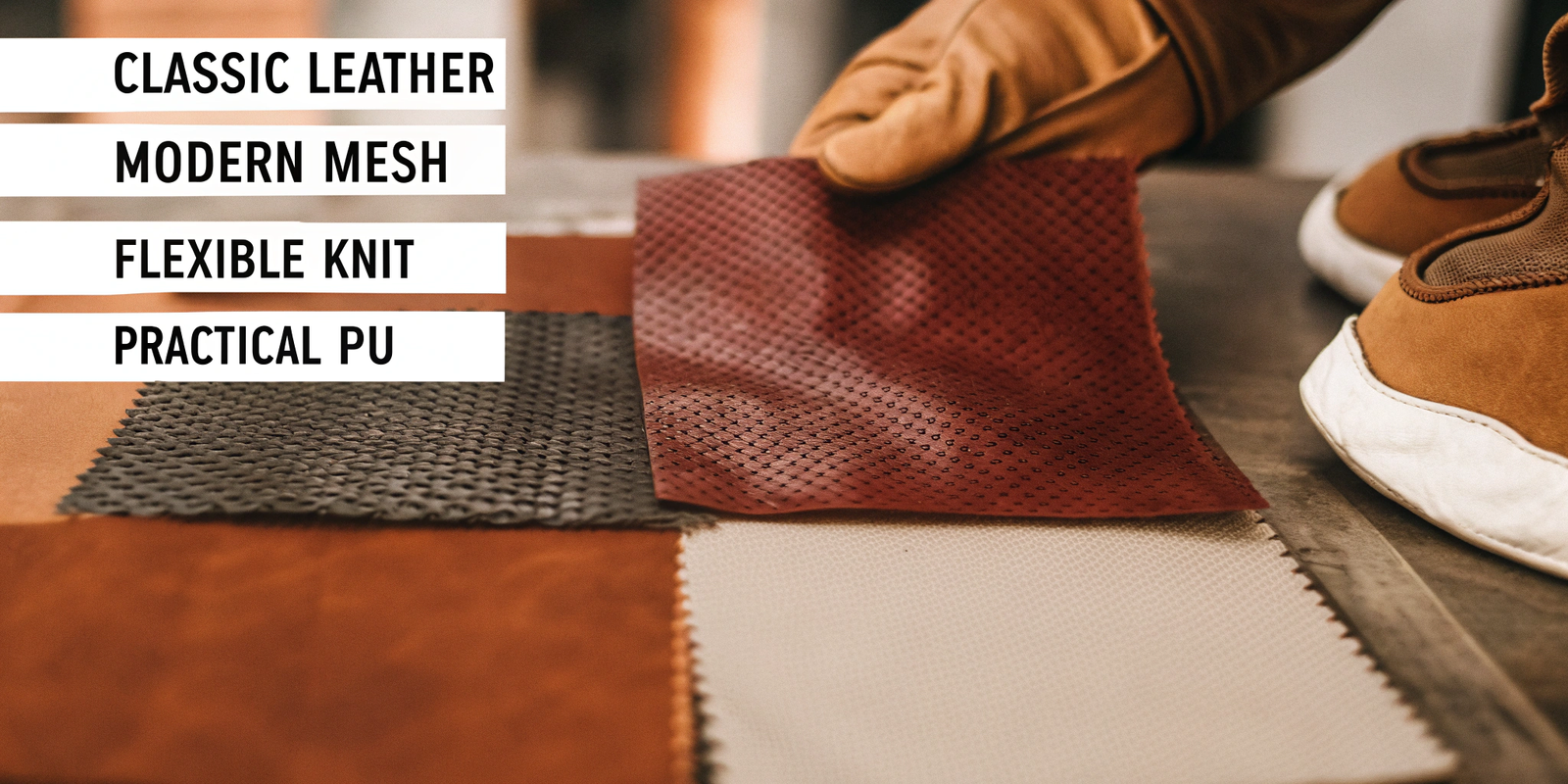
Leather vs PU vs Mesh vs Knit shoes?
Do you often struggle to decide between a classic leather, a modern mesh, a flexible knit, or a practical PU pair, unsure which material will truly meet your expectations for comfort, longevity, and how it will perform in different conditions? Making the right choice means understanding the fundamental differences.
Leather offers durability, natural breathability, and molds to the foot for comfort; PU (polyurethane) is a cost-effective, water-resistant synthetic with a leather-like look; mesh provides superior breathability, lightweight construction, and flexibility, ideal for athletic shoes; while knit fabric offers a seamless, sock-like fit with exceptional stretch and breathability for modern, comfortable designs.
Here's a breakdown of leather, PU, mesh, and knit shoe uppers:
-
1. Leather:
- Dive Deeper: Leather, particularly full-grain or top-grain leather, is a natural material derived from animal hides. It has been a staple in footwear for centuries due to its exceptional qualities.
- Durability and Longevity: Leather is incredibly strong and abrasion-resistant, offering excellent longevity if properly cared for. It can withstand significant wear and tear, making it ideal for boots, formal shoes, and high-quality everyday footwear.
- Breathability: As a natural material, leather is inherently breathable, allowing air to circulate and moisture (sweat) to escape. This helps regulate foot temperature and keeps feet drier, reducing odors.
- Molds to Foot: Over time, leather conforms to the unique shape of the wearer's foot, providing a custom-like fit and enhanced comfort. This "breaking in" process is a hallmark of quality leather footwear.
- Aesthetics and Patina: Leather often develops a beautiful patina with age, enhancing its character. It offers a classic, sophisticated look that can range from polished and formal to rugged and casual.
- Water Resistance (with treatment): While not inherently waterproof, treated leather can offer good water resistance. However, leather can be heavier and more expensive than synthetic alternatives, and it requires maintenance (cleaning, conditioning) to retain its properties. Our Lucas ballerinas, heels, and boots often feature premium leather for their timeless elegance and durability.
- Dive Deeper: Leather, particularly full-grain or top-grain leather, is a natural material derived from animal hides. It has been a staple in footwear for centuries due to its exceptional qualities.
-
2. PU (Polyurethane):
- Dive Deeper: PU, or polyurethane, is a synthetic (man-made) leather alternative. It is essentially a layer of polyurethane coating applied to a base fabric (like cotton or polyester) to mimic the look and feel of leather.
- Cost-Effectiveness: PU is significantly less expensive to produce than genuine leather, making it a popular choice for budget-friendly footwear.
- Water Resistance: The polyurethane coating makes PU very water-resistant, often more so than untreated genuine leather, as it doesn't absorb water readily. This makes it suitable for rain boots or casual shoes that might encounter wet conditions.
- Consistency: PU offers a uniform appearance and texture, without the natural imperfections found in genuine leather. It is also easier to clean and maintain, usually just requiring a wipe down.
- Versatility: PU can be manufactured in a vast array of colors, textures, and finishes, including patent, metallic, and various embossed patterns, offering immense design flexibility. However, PU is generally less breathable than leather, can be less durable (prone to cracking or peeling over time, especially with flexion), and does not mold to the foot as well as natural leather. At Lucas, we use high-quality PU in some of our trendy casual shoes and sandals for its practical benefits and aesthetic versatility.
- Dive Deeper: PU, or polyurethane, is a synthetic (man-made) leather alternative. It is essentially a layer of polyurethane coating applied to a base fabric (like cotton or polyester) to mimic the look and feel of leather.
-
3. Mesh:
- Dive Deeper: Mesh uppers are fabrics woven with an open, net-like structure, typically made from synthetic fibers like polyester, nylon, or sometimes recycled plastics.
- Maximum Breathability: This is mesh's primary advantage. The open weave allows for excellent air circulation, keeping feet cool and dry, making it ideal for athletic activities or warm climates.
- Lightweight: Mesh is incredibly light, contributing to a shoe's overall low weight, which is beneficial for running shoes and other performance footwear.
- Flexibility and Comfort: Mesh is highly flexible, allowing the foot to move naturally and reducing friction points. It often requires minimal break-in time.
- Quick Drying: Synthetic mesh dries quickly, an advantage for sports shoes that might get wet. The main drawback of mesh is its relatively lower durability compared to leather, being more susceptible to abrasion and tearing. It also offers less support than structured materials and is not water-resistant without special treatments. Our Lucas sports shoes and many sneakers utilize advanced mesh technologies for ultimate breathability and lightweight performance.
- Dive Deeper: Mesh uppers are fabrics woven with an open, net-like structure, typically made from synthetic fibers like polyester, nylon, or sometimes recycled plastics.
-
4. Knit:
- Dive Deeper: Knit uppers are constructed by knitting yarn (typically synthetic like polyester, sometimes natural blends) into a single, seamless piece of fabric, often directly on a machine. This creates a sock-like upper.
- Seamless, Sock-like Fit: Knit uppers are renowned for their incredible flexibility and elasticity. They conform to the foot's shape, offering a snug, comfortable, and adaptive fit that feels like a second skin.
- Lightweight and Breathable: Similar to mesh, knit materials are very light and can be designed with varying densities, allowing for zones of enhanced breathability or support.
- Reduced Friction: The seamless construction minimizes rubbing and irritation points, which can be beneficial for blister prevention.
- Sustainable Potential: Some knit uppers use recycled yarns and efficient manufacturing processes, reducing waste. Knit uppers can offer less structural support than leather or structured synthetics and might be less durable against abrasion or punctures. They are also generally not water-resistant. Many modern Lucas sneakers and casual shoes feature knit uppers for their contemporary look and unparalleled comfort. Conclusion
- Dive Deeper: Knit uppers are constructed by knitting yarn (typically synthetic like polyester, sometimes natural blends) into a single, seamless piece of fabric, often directly on a machine. This creates a sock-like upper.
Understanding footwear upper materials is key: leather offers classic durability and breathability; PU is a versatile, cost-effective alternative; mesh excels in lightweight breathability; and knit provides unmatched flexible, sock-like comfort. Your choice should align with your specific needs.